Tree trimming and pruning in NH should have a clear purpose, according to the International Society of
Arboriculture (ISA), because every cut can change how a tree grows.
The ISA says the main reasons to prune are to remove dead branches, improve form and reduce risk. Other
reasons include improving light and air movement and providing clearance. The ISA also notes that routine
thinning does not necessarily improve tree health and that heavy pruning can stress a tree.
How Much Can Be Pruned at Once?
Shade and Ornamental Trees
The ISA recommends removing no more than 25 percent of the crown at one time. Mature trees should have
less removed, and younger trees can tolerate more.
Overgrown Fruit Trees
UNH Extension says overgrown fruit trees should be pruned over several years, with no more than one third of
the canopy removed in a single year.
UNH Extension says most pruning is done at the end of the dormant season, because it avoids winter cold
injury, makes flower buds easy to recognize and lets wounds close quickly. The ISA agrees that pruning before
spring growth is generally best.
Spring-Blooming Shrubs
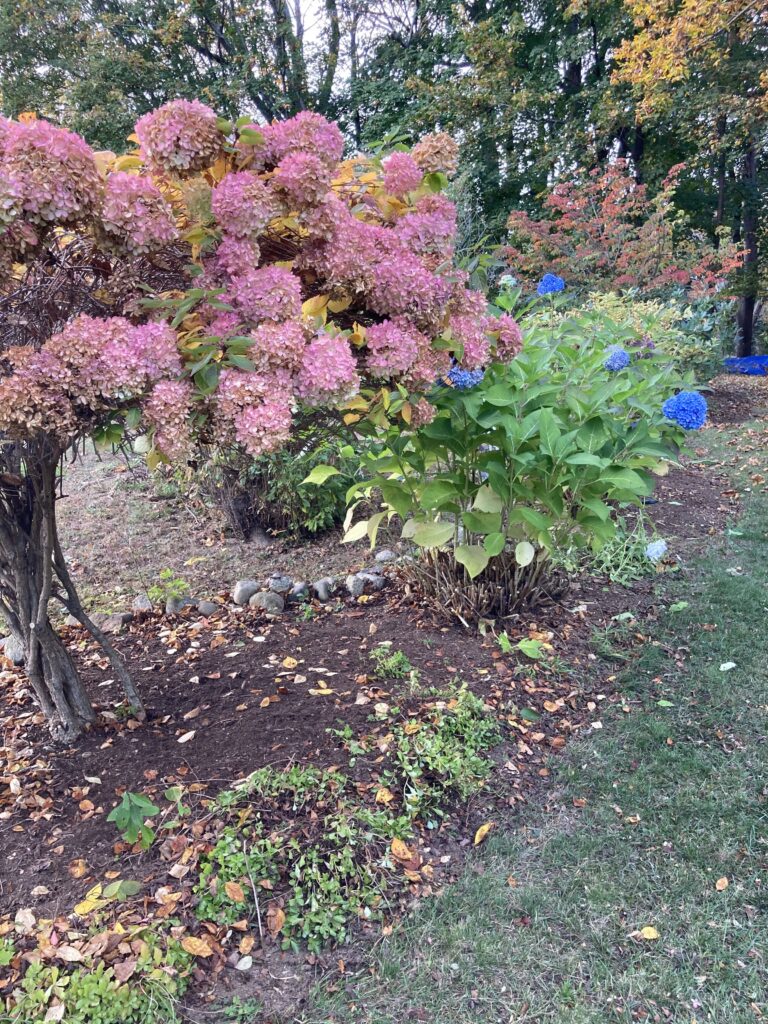
UNH Extension advises pruning spring-blooming ornamentals such as lilac, rhododendron and bigleaf
hydrangea right after they flower, because late dormant pruning removes buds that are already set. For hedges and shrubs, see our hedge maintenance and ornamental
pruning services.
Dead and Damaged Limbs Any Time
The ISA says routine removal of weak, diseased or dead limbs can be done at any time of year. UNH Extension
recommends avoiding late summer and fall pruning, because wounds can die back, and the ISA advises
avoiding heavy pruning of live tissue just after the spring growth flush.
The ISA calls topping “not an acceptable pruning technique.” Cutting branches back to stubs triggers a burst of
weak sprouts, leaves large wounds that are harder for a tree to defend, and exposes inner bark to sunburn.
When a larger limb must be shortened, the ISA recommends cutting back to a side branch at least one third
the diameter of the limb being removed.
The ISA recommends hiring a professional arborist when pruning involves working above ground or using
power equipment. Soul Tree Care’s lead arborist is an ISA Certified Arborist. Ask for a free quote.